The plow went by at 5 a.m. and left a wall of packed snow at the end of your driveway. Or you pulled onto a side street shoulder, felt the car drop, and now the wheels just spin. Being stuck in snow is one of the most common calls we take from December through March, and most of them could have been a five-minute fix if the first ten minutes had gone differently. Here's the safe order to try things in, what never to do, and the point where you should stop and call a winch-out.
First, Before Anything Else: Check Your Tailpipe
A buried exhaust can fill the cabin with carbon monoxide
If the back of the car is sitting in a snowbank, the exhaust pipe may be packed with snow. With the engine running and the windows up, exhaust gas has nowhere to go but inside. Carbon monoxide has no smell and no colour. Before you sit in a running car to wait or to spin the wheels, get out and clear the tailpipe completely. If you can't clear it, keep the engine off and crack a window.
Then check where you are. If you're stuck on a highway shoulder or a live lane with traffic passing, your job is not to get unstuck, it's to stay safe: hazards on, stay belted in the car unless it's safer to get out and away from traffic, and call for help. If anyone is hurt or you're blocking a live lane, call 911 first.
How to Get Your Car Unstuck From Snow, Step by Step
For a car that's stuck in a driveway, a parking lot, or a quiet residential street, work through this in order. Each step is gentler on the car than the one after it.
- Straighten the wheels. Turned wheels plough snow instead of climbing over it. Point them straight ahead so the tires have the shortest path out.
- Dig out the drive wheels and the underside. Clear snow from in front of and behind all four tires, and check the car isn't beached: if packed snow is holding the body up off the ground, the tires have no weight on them and will never grip. Clear it from under the bumpers and the middle of the car.
- Give the tires something to bite. Sand, road salt, non-clumping kitty litter, or your car's floor mats wedged in front of the drive wheels (behind them if you're reversing out). Stand well clear once you start moving; a mat can shoot out.
- Turn traction control off. It sounds backwards, but on many cars traction control cuts power the moment a wheel slips, which is exactly the slip you need to creep out. Check your owner's manual, and switch it back on once you're free.
- Go gently, in the lowest gear. Light throttle. You want the tires turning slowly enough to grip, not spinning. If the car moves even an inch, keep that momentum.
- Rock it, carefully. Ease forward as far as it will go, then ease back, and repeat to build a short track. Wait until the car has fully stopped before you shift between Drive and Reverse. Slamming between gears while the wheels are still turning is how transmissions get damaged.
Stranded right now? Don't wait.
Call +1 437-215-3468Average arrival: 15 to 30 min · Pickering · Ajax · Whitby · Oshawa · Scarborough
What Not to Do (The Mistakes That Turn a Stuck Car Into a Repair Bill)
Flooring it
Spinning the wheels hard polishes the snow underneath into ice and digs the tires deeper. It also overheats the transmission and, on some cars, can damage the differential. If the wheels are just spinning in place, more throttle is making it worse.
Letting a stranger yank it out with a strap
Tow straps tied to a bumper, a suspension arm or a tie-down loop that isn't rated for recovery can rip parts off the car. A strap that snaps under tension can also whip back hard enough to injure someone. Recovery points on most modern cars are specific, and some are hidden behind a cover in the bumper.
Pushing from behind a spinning wheel
If friends are pushing, keep them to the sides of the car, not directly behind or in front of it, and never behind a wheel that's throwing snow, ice and gravel.
When to Stop and Call for a Winch-Out
Give it an honest ten minutes of the steps above. If the car hasn't moved, stop. These are the situations where a winch-out is the right call, not the last resort:
- The car has slid into a ditch or down an embankment. Driving out of a ditch at an angle risks a rollover or a torn-off bumper. A controlled winch pull from the right angle doesn't.
- It's beached on packed snow or a snowbank and digging hasn't freed the underside.
- You're on a shoulder or a busy road where standing outside digging isn't safe.
- You smell burning or see smoke from spinning wheels. That's the clutch or transmission, and it's time to stop.
- It's an AWD or low-clearance car. Both are easy to damage with improvised pulls and pushes.
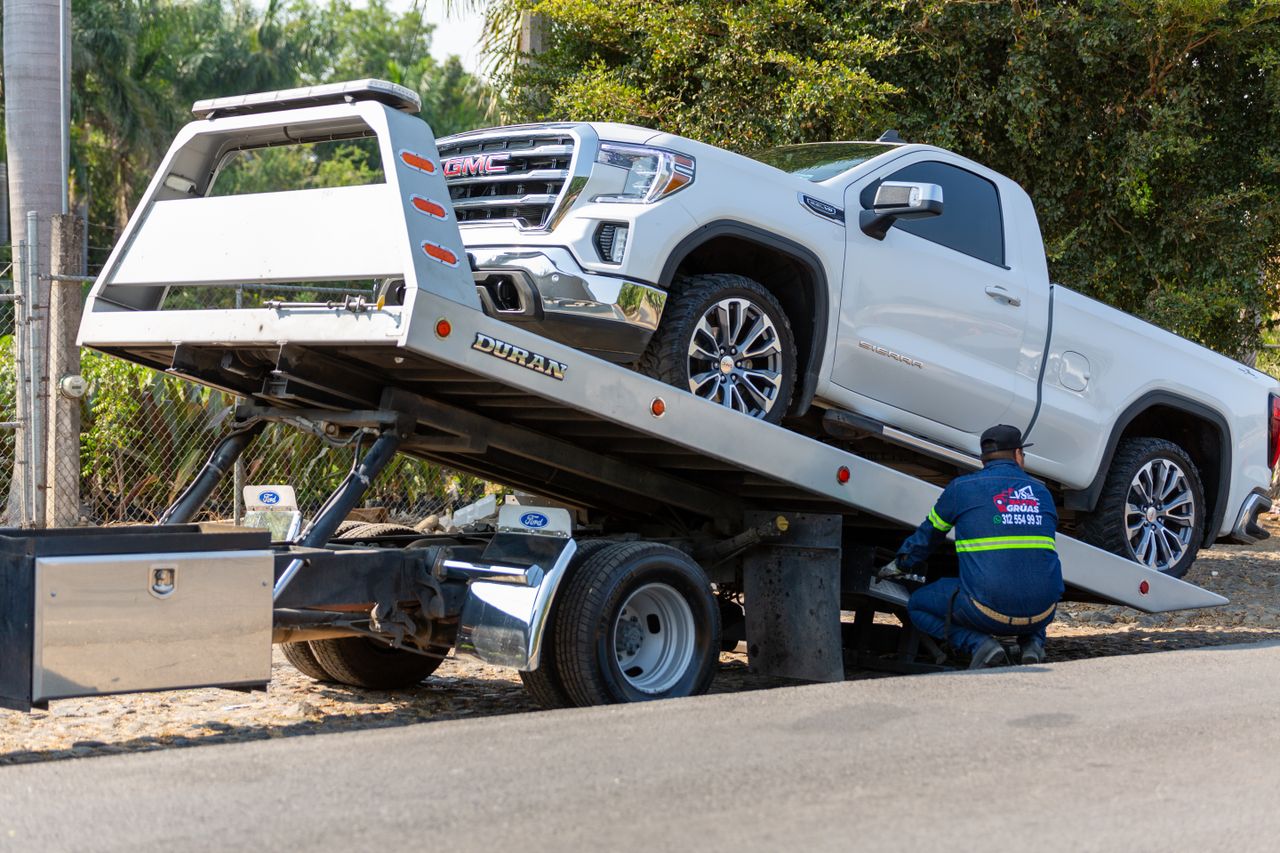
iFAST Roadside Assistance runs recovery trucks 24/7 across the GTA. Our towing and recovery units carry hydraulic winches built to pull cars out of snow-filled ditches and deep snowbanks slowly and from the correct angle, so the bumper stays on the car. Once you're back on solid ground we check underneath for damage. If the car is fine, you drive away. If it isn't, we can tow it to your driveway or your shop in the same visit. Most drivers see us in 15 to 30 minutes.
Stranded right now? Don't wait.
Call +1 437-215-3468Average arrival: 15 to 30 min · Pickering · Ajax · Whitby · Oshawa · Scarborough
Stuck and the Car Won't Start Either?
Deep cold and a long wait in a snowbank are hard on a battery, especially if you've been idling with the heater on or cranking a stalled engine. If you get free and then get a click instead of a start, that's a separate problem with a quick fix. Our guide to why cars won't start in the cold covers what to try, and a mobile battery boost usually has you running in minutes.
Keep a Stuck-in-Snow Kit in the Trunk
Everything on this list fits in a small bin and turns most stuck-in-snow situations into something you can handle yourself:
- A compact or folding snow shovel
- A bag of sand or non-clumping kitty litter (it also adds weight over the rear wheels on rear-wheel-drive cars)
- A snow brush and ice scraper
- Warm gloves, a hat and a blanket, in case you're waiting
- A phone charger and a flashlight
- Our number saved in your phone: +1 437-215-3468
And the best prevention costs nothing: when heavy snow is coming, park nose-out, away from where the plow will push the bank, and keep the tank at least half full so you can run the heater safely while you wait if you ever need to.
Stranded right now? Don't wait.
Call +1 437-215-3468Average arrival: 15 to 30 min · Pickering · Ajax · Whitby · Oshawa · Scarborough