The first real cold snap of the winter, our phone doesn't stop. And it's the same call almost every time: "It was completely fine last night. This morning — nothing." A car that ran perfectly on Tuesday will not turn over on a −15°C Wednesday, and it feels like it broke overnight. It usually didn't. Here's what the cold is actually doing under your hood, the 60-second playbook to try before you call anyone, and the single mistake that turns a two-minute boost into a tow.
Why the Cold Does This: Two Things Happening at Once
A no-start on a cold morning is almost never bad luck. It's physics, and there are two forces working against you at the same time:
Your battery gets weaker
A car battery makes power through a chemical reaction, and cold slows that reaction down. At around −18°C a healthy battery delivers roughly half the cranking power it has on a mild day. A battery that's two or three winters old has even less in reserve — so the cold doesn't create the problem, it exposes one that was already there.
Your engine gets harder to turn
Engine oil thickens as it gets colder. On a freezing morning the starter has to shove the engine through oil the consistency of syrup — so it demands more power at the exact moment the battery has less to give. That's the squeeze. When the two lines cross, you get a slow groan, a click, or silence.
This is why a battery that was "fine" can die without warning: it was quietly fading all along, and the first hard freeze was simply the morning it ran out of margin.
The 60-Second Cold-Morning Playbook
Before you assume the worst, run through this. It costs a minute and it starts a surprising number of cars:
- Kill everything electrical first. Heater, headlights, rear defrost, radio, phone charger — all off. Every one of those steals power the starter needs. Give the battery its whole reserve for the one job that matters.
- Dip the clutch or hold the brake. On a manual, pressing the clutch in takes the transmission out of the equation so the starter turns less. On an automatic, make sure you're firmly in Park.
- Crank in short bursts — then stop. Try the key for no more than 5 seconds, then wait 20–30 seconds and try once more. Short tries let the battery recover a little between attempts.
- If it hasn't caught in three tries, stop. This is the part people get wrong.
The one mistake that turns a boost into a tow
Cranking over and over feels like effort, like you're getting closer. You're not — you're draining what little charge is left, and each long crank also pumps raw fuel into a cold engine that can foul the plugs. Grind a weak-but-boostable battery flat and you can turn a two-minute jump into a no-start that genuinely needs a tow. When in doubt, stop and call.
Stranded right now? Don't wait.
Call +1 437-215-3468Average arrival: 15–30 min · Pickering · Ajax · Whitby · Oshawa · Scarborough
Is It Really the Battery? The Cold-Weather Suspects
Nine times out of ten on a cold morning it's the battery — but the sound your car makes narrows it down, and it decides whether a boost will actually fix it:
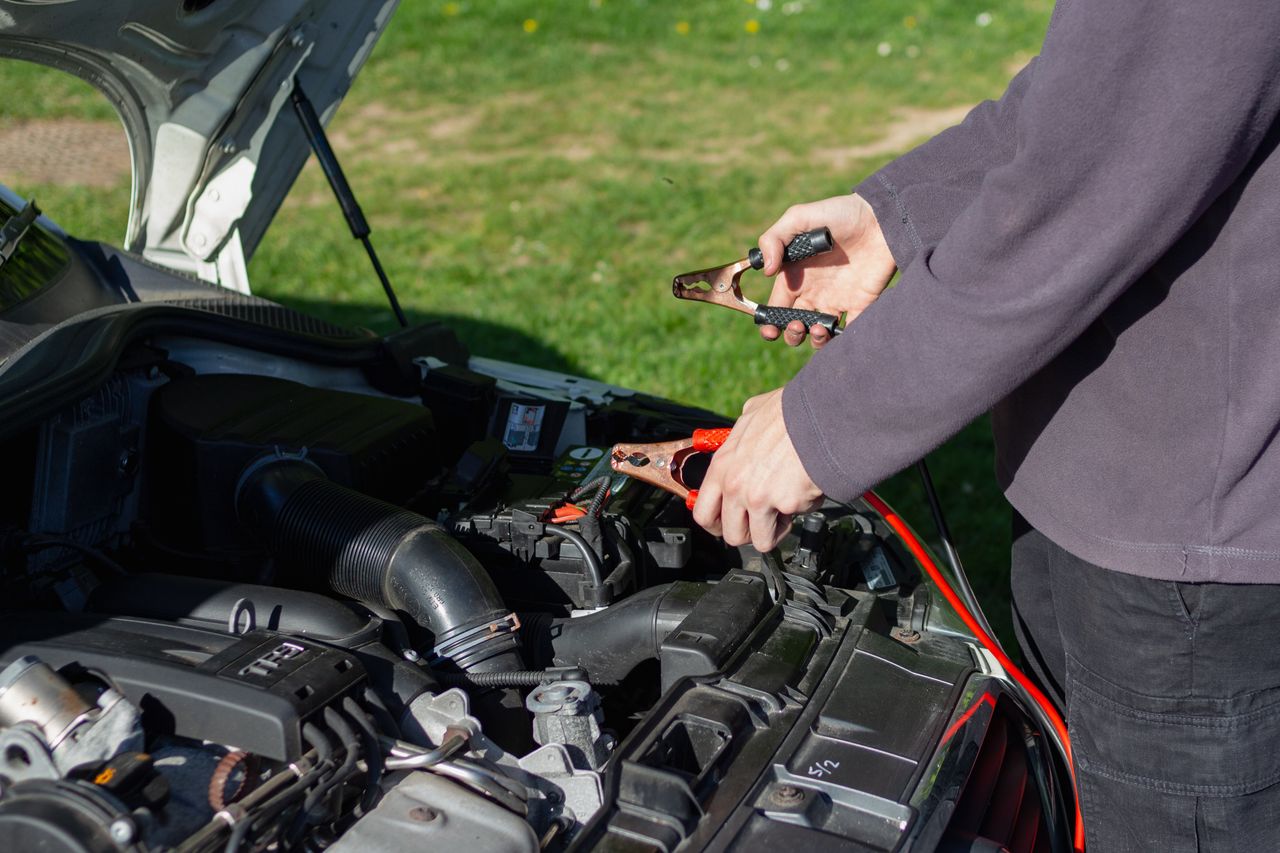
- Rapid clicking or a slow groan, then it catches on a boost — classic cold-weakened battery. A jump gets you going, but a battery that groaned this morning is on borrowed time. Here's how we decide whether it needs a boost or a replacement.
- Cranks strong but won't fire — the battery's fine; suspect fuel or a cold-start sensor issue. This one needs a mobile mechanic, not just a boost.
- One click or dead silence — could be a deeply flat battery, a corroded terminal, or a starter. Worth having someone test before you buy a part you may not need.
A "frozen battery" in the literal sense — the electrolyte actually freezing solid — is rarer, and it only happens to a battery that was already deeply discharged. If a battery is frozen, it should not be jumped; it needs to be assessed and usually replaced. That's exactly the kind of call worth making before you try anything else.
When to Stop Trying and Just Call
If you're late, it's freezing, and the car has clicked twice — you don't have to stand in the cold problem-solving. That's the whole point of a mobile unit. iFAST Roadside Assistance runs 24/7 across the GTA, and a cold-morning boost is the most common call we take. We bring commercial-grade boost packs built to turn over deeply cold engines that consumer jump boxes can't — and once you're running, we test the battery and charging system on the spot so you know whether it'll survive the next freeze or leave you stranded again on Thursday.
If the battery is done, we can supply and fit a replacement right in your driveway — no tow, no shop drop-off. Most drivers see us in 15–30 minutes.
Stranded right now? Don't wait.
Call +1 437-215-3468Average arrival: 15–30 min · Pickering · Ajax · Whitby · Oshawa · Scarborough
Stop It Happening Again
The drivers who don't get caught out are the ones who treat the battery as a wear item, not a surprise:
- Know its age. Most car batteries last 3–5 years in Ontario's climate. If yours is past three winters, it's living on borrowed time — get it tested before the cold, not during it.
- Watch for the tell. A slow, lazy crank on a mild day is the clearest warning you'll get. A battery that groans in October will not survive January.
- Drive it. Lots of short trips in winter never fully recharge the battery. An occasional longer drive helps it hold charge.
A quick battery-and-charging test before winter costs nothing like a stranded morning does — and we can do it at your home or workplace while the weather's still on your side.
Stranded right now? Don't wait.
Call +1 437-215-3468Average arrival: 15–30 min · Pickering · Ajax · Whitby · Oshawa · Scarborough